Writers Seek

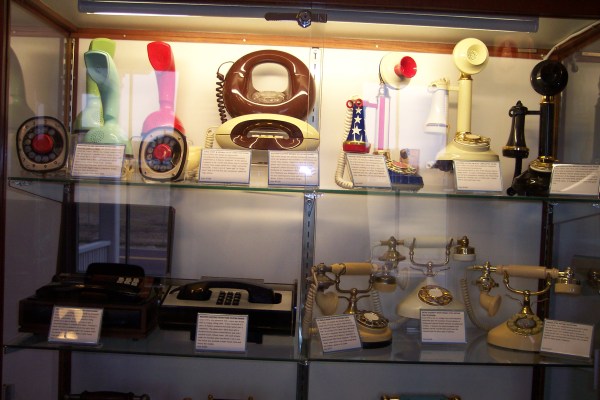
100_7527A Trip to the Telephone Museum

By Annette Rey

It shouldn’t get boring to hear, “There is no such thing as writer’s block.” That should be good news to those of you who find it difficult to populate your screen with words.

One of the techniques to fill that screen is to change your physical environment and seek out resources with subject matter about which to write. The subject does not have to be an unusual one, but when you find one, pounce!

A trip to the Telephone Museum filled that bill.

Continue reading

Four Self-editing Tips

Suggested Steps to Improve Your Work

By Annette Rey

Sometimes writing flows and we think we are inspired. We think we are creating a good piece. And it may be very good. But all writing needs to be reviewed for errors and improvements.

The following four basic steps will help you to self-edit and will tighten up your creation.

One:  Go back to your work a day later to get a fresh perspective. Your subconscious mind has been working and will have improvements in store.

may-16-125Two:  Read your work aloud. Is your voice pausing in places? Perhaps you need to insert a comma. As you read, are you not pausing at a comma point? Review, and the comma may need to be removed. Reading aloud helps you sound for flow, but you should be familiar with punctuation rules. Reading aloud is also necessary in areas of dialogue to identify whether the exchange between characters sounds believable.

Three: Cut unnecessary words from your work. Some writers find this a difficult task as our words are our babies. As you attempt to cut, rearranging words for clarity seems to automatically occur.

Compare:

Original sentence: There are many unnecessary words used in sentences.

Edited sentence:   Many unnecessary words are often used in sentences.

Above is an attempt to shorten a sentence by cutting out the unnecessary words there are. The result is a better sentence of the same length. If you have constructed a good sentence, length is not important as long as the meaning is clear for your reader to understand.

Four: Double-check your work with reference manuals on spelling, grammar, and punctuation. We fall into comfortable habits and speak imprecisely which often translates to errors in our writing.

Please share with me some of the techniques you use to correct your work.


Affect. Effect. Which to Choose?

Affect/verb – Effect/noun.

By Annette Rey

Lots of books will tell you everything you don’t want to know about these words. My desire is not to denigrate the English language, or the authors of those helpful books, but to make this article a short explanation of which of these words to use and when.

The following mental exercise should implant in your brain. Use this exercise and the next time you are creating a sentence that uses affect or effect, you will not pause as to which word is the correct one to use.

Continue reading

Writer’s Encouragement

Believe. Work. Believe.

By Annette Rey

I believe there is no such thing as writer’s block. Your thoughts can drive you forward or be self-limiting. Whatever you tell yourself, you believe. Think a moment about that statement.

Believing is mental action that energizes, it is a power unto itself. It is the first step to taking physical action. Believe there are no limits. Open your mind.

Continue reading

Grammar Matters

By Annette Rey

A myriad of grammar guides exist and I have half a dozen of them. The one I find most extensive and simply written is Who’s (oops) Whose Grammar Book Is This Anyway? By C. Edward Good. This book was originally published as A Grammar Book for You and I (oops! Me). This is my go-to resource for sentence construction.

Continue reading

Word Errors

This falls into the More-Than-Embarrassing class.

By Annette Rey

I have said watching television is a good thing for a writer. It can give you subjects about which to write. Proof in point, this article is a result of something I witnessed in a real-crime TV program.

A woman had violently murdered a rival and got away with it, claiming self-defense.

Some years later, she was put in prison for playing a conspiratorial role in a murder. She had not actually laid a hand on this victim.

A man commenting on the case said, “That was kind of erotic.”

I paused, rather shocked. I thought, how is that erotic? It bothered me. This was a respected, crime-coverage program. The people producing this show should know English. Didn’t anyone catch that? Wouldn’t they have shot that scene again?

I was embarrassed for the man, and the program.

Do you know what word the man would have said if he hadn’t settled for a sound alike word?

The word is ironic.

The incorrect use of erotic at that crucial stage of the story was a glaring error in a subject of such serious nature. It stunned me and interfered with the flow of the film. They lost me. I didn’t pay a lot of attention after hearing that. My mind was preoccupied with questions. Didn’t a lot of people on the set hear that? What of the editing process? And worse, are people unconcerned about proper use of language?

This could happen to you in your writing. And it disturbs your reader.

Work hard on your piece. Reread it a dozen times. Read it aloud. If something doesn’t sound just right, follow your instincts and check on it.

Owning reference books is a must. At the very least you should have a thesaurus, a dictionary, and a grammar book. Don’t primarily rely on the internet to check your work. The internet is just a guide for informal writing. It is not the end-all for important submissions, although the Chicago Manual of Style site is one I would trust.

Approach your work with the desire to present a professional image. Keep learning the craft of writing. Do a lot of reading. This will help you improve your use of English. Preplan, yet be flexible. Re-do your work. Shoot for perfection. Try to eliminate those embarrassing errors.

Make it your best before you press send.


CSI Books for Kids

By Annette Rey

Most writers have children. If you are a crime/mystery writer, you might want to share what you do with your appropriately-aged kids. It never hurts to have more understanding between parents and children. And all parents should encourage their children to read.

Following is a list from my local library of CSI books for kids.

Crime Scene by Vivien Bowers

Forensic Science by Ron Fridell

Bones Never Lie: How Forensics Helps Solve History’s Mysteries by Elizabeth MacLeod

Crime Scene Science Projects by Elizabeth Harris

Dusted and Busted!: The Science of Fingerprinting by D. B. Beres

Fingerprints: Crime Solving Science Experiments by Kenneth G. Rainis

Hair, Clothing and Tire Track Evidence by Kenneth G. Rainis

Blood and DNA Evidence by Kenneth G. Rainis

Forgery: Crime Solving Experiments by Brian Lane

Crime and Detection by Brian Lane

Gut-eating Bugs: Maggots Reveal the Time of Death by Danielle Denega

The Human Body: Investigating an Unexplained Death by Andrew Solway

And, finally:

Forensics: Uncover the Science and Technology of Crime Scene Investigation by Carla Mooney

These books sound exciting. The ones on science experiments should appeal to both you and your children. What parent isn’t looking to guide their child for the annual Science Project at school?

There’s more to learn where this came from. Visit your public library.


Crime Investigation Book List

By Annette Rey

Writers can always use a concise list of category-specific books. Following is a list from my public library.

FBI Handbook of Crime Scene Forensics

Forensic Science (3 volume reference set)

The CSI Effect by Katherine Ramsland

The Real World of a Forensic Scientist by Henry Lee

Forensics the Easy Way by Harold Trimm

The Mammoth Book of Crime Scene Investigation by Roger Wilkes, B.A. (editor)

Aftermath, Inc.: Cleaning Up After CSI Goes Home by Gil Reavill

Teasing Secrets from the Dead by Emily Craig

Murderous Methods: Using Forensic Science to Solve Lethal Crimes by Mark Benecke

Cracking More Cases: The Forensic Science of Solving Crimes by Henry C. Lee

Shocking Cases From Dr. Henry Lee’s Forensic Files by Henry C. Lee

A Question of Murder by Cyril Wecht

Tales from the Morgue: Forensic Answers to Nine Famous Cases by Cyril Wecht

The Forensic Psychology of Criminal Minds by Katherine Ramsland

Ultimate CSI by Catherine Marrinan

Dead Center: Behind the Scenes at the World’s Largest Medical Examiner’s Office by Shiya Ribowsky

And finally:

Beyond the Body Farm: A Legendary Bone Detective Explores Murders, Mysteries, and the Revolution of Forensic Science by William Bass

I don’t know about you, but I want to read all of these!


Your Local Public Library


A Writers’ Need

By Annette Rey

Did You Know…?

A writer’s information resource often overlooked is your public library.

The library is not just about books anymore?

Your library is equipped with a check-out system you can access from your home computer. Isn’t that great when you are snowed in? That feature is a real plus for writers who don’t want to leave their lair. And what about the money you save when you don’t have to purchase a necessary product?

Let’s crack the surface and see all the things your library has to offer.

Continue reading

Writer’s Words

Wonderful  Words – pique and fête

By Annette Rey

Writers, do your research. Nothing is worse than to misuse a word unless it is to misspell it. One of my biggest bugaboos is putting a word into your work and not doing your own spell checking. Take nothing for granted. Check it.

I saw a piece of work with the intended word pique. He spelled it as it sounds, peek. The sentence said something can peek your interest. Of course, spell check did not catch that.

The more you read, the better you will become at using English.

Another word error I observed in a piece of work was fête. This word, correctly pronounced, sounds like the word fate. This writer spelled it feet because he thought that is how the word is pronounced (it was not a typo).

Both of these writers did not do their research. And how long does it take to look up a word in a dictionary?

Your writing stands as an example of you.